
Contrast Therapy Explained: Sauna and Cold Immersion for Recovery
Modern life keeps most of us switched on. Long hours sitting or standing, constant notifications, hard training, poor sleep, mental load. Over time, the body adapts to stress by staying tense, inflamed and tired.
Contrast therapy offers a simple way to interrupt that pattern.
It is not new. Variations of hot and cold bathing have been used for centuries across Nordic, Japanese and Roman cultures. What is new is how clearly we now understand its effects on recovery, circulation and the nervous system.
At its core, contrast therapy is about helping the body remember how to regulate itself.
What is contrast therapy?
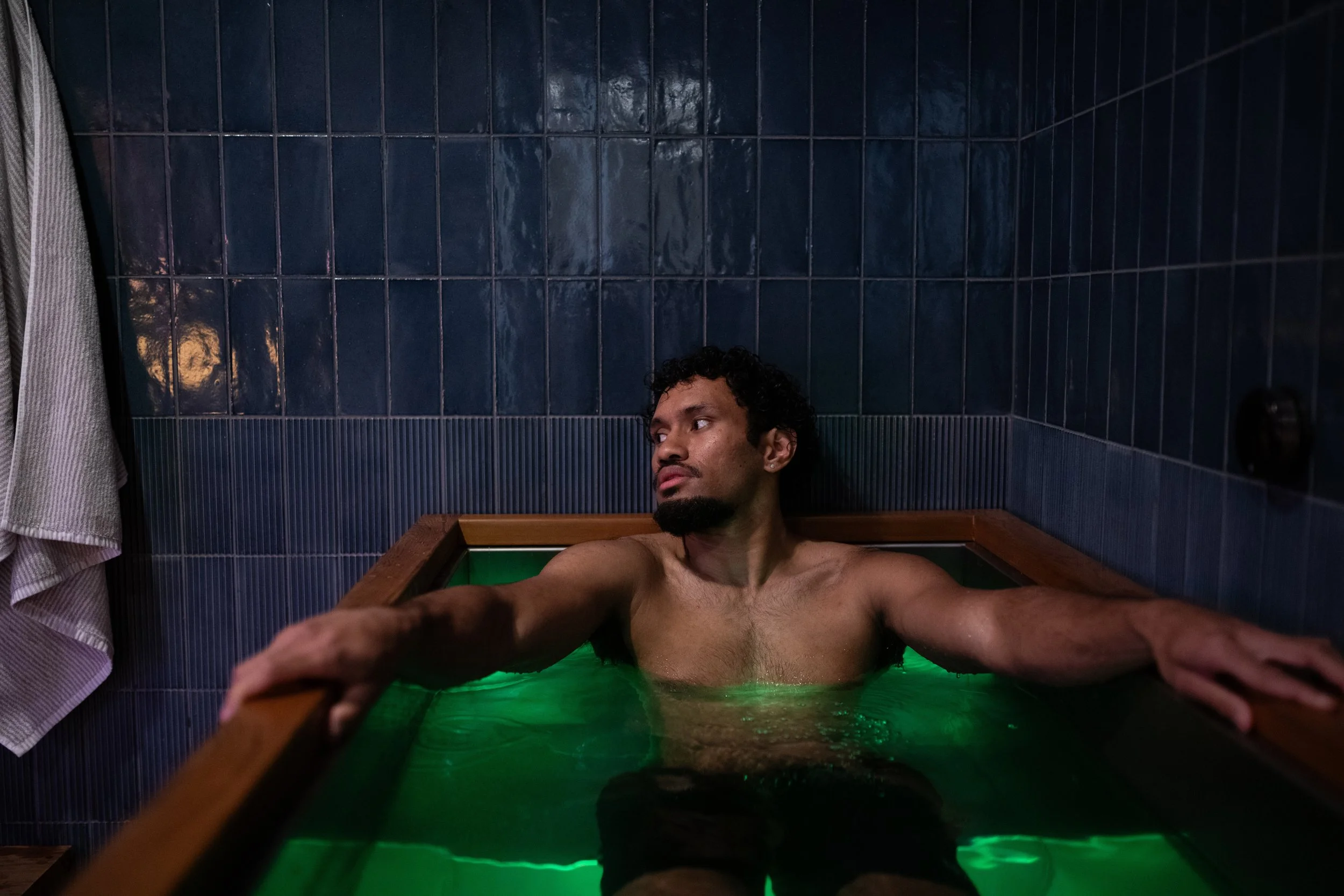
Contrast therapy involves alternating between heat and cold exposure, typically using a sauna followed by a cold plunge or cold shower.
At Boon, this usually looks like:
10–15 minutes in the infrared sauna
1–3 minutes in the cold plunge
repeated for 2–3 rounds
The temperatures and timing do not need to be extreme. The benefit comes from the change itself, not endurance.
This shift between hot and cold creates a powerful but controlled stimulus for the body.
Hot, cold, repeat: what actually happens
Heat and cold trigger different systems in the body.
When you enter the sauna:
blood vessels widen
circulation increases
muscles relax
breathing slows
the nervous system begins to downshift
When you enter the cold:
blood vessels briefly constrict
inflammation is reduced
alertness increases
the stress response is activated in a short, controlled way
Moving between the two trains your nervous system to switch gears more easily.
Instead of being stuck in constant “on” mode, your body practises moving between stimulation and recovery. Over time, this flexibility becomes easier to access in everyday life.
This is one reason contrast therapy often leads to better sleep, improved mood and a greater sense of physical ease.
Why athletes use contrast therapy
Athletes adopted contrast therapy long before it became mainstream.
Training places deliberate stress on the body. Muscles are broken down. Joints are loaded. The nervous system works hard to coordinate movement.
Contrast therapy helps by:
reducing muscle soreness after training
improving circulation to fatigued tissues
supporting faster perceived recovery between sessions
maintaining joint comfort and range of motion
helping the nervous system settle after intense effort
It does not replace good training, nutrition or sleep. But it can make those things work better by allowing the body to recover more efficiently between sessions.
This is why contrast therapy is common in professional sport, endurance training and high-performance environments.
Why busy people need it too
You do not need to train hard to need recovery.
Long hours at a desk, mental pressure, irregular sleep and constant low-grade stress place just as much demand on the nervous system as physical exercise.
For busy people, contrast therapy often supports:
reduced feelings of tension and restlessness
improved sleep quality
clearer thinking and steadier energy
less neck, back and joint stiffness from sitting or standing
a stronger sense of switching “off” at the end of the day
In other words, it creates a boundary between stress and rest that many people struggle to find on their own.
Instead of carrying the day into the night, the body is given a physical signal that it is safe to slow down.
How often should you use contrast therapy?
For most people, 2–4 sessions per week is enough to notice benefits.
Consistency matters more than intensity.
Short, regular sessions create better long-term results than occasional extreme exposure. The goal is to support your system, not overwhelm it.
A simple recovery tool that fits real life
Contrast therapy works because it’s simple, repeatable and deeply physical. You don’t need to analyse your stress or force yourself to relax. You let temperature do the work. The body responds instinctively.
Over time, many people notice:
better sleep
less soreness
steadier mood
improved resilience to stress
a stronger connection to how their body feels
If you’d like to experience contrast therapy at Boon Wellness, our sessions combine infrared sauna and cold immersion in a calm, private setting designed for consistency rather than intensity. Over 40 or 75 minutes, you’ll have the freedom to move between the sauna or cold plunge at your own pace, whether you’re alternating regularly, or simply trying a quick plunge at the end of your sauna session.
You can learn more here or book a session online.
