
Red Light Therapy for Recovery
Recovery is not just about rest. It is about creating the right internal conditions for the body to repair, reset, and adapt.
Training, long workdays, mental load, and disrupted sleep all place cumulative stress on muscles, joints, and the nervous system. This stress is often quiet and gradual, building over time rather than appearing as a single injury or moment of fatigue. For many people, it shows up as lingering soreness, stiffness that never fully clears, or the sense that the body simply does not bounce back the way it used to.
Red light therapy offers a low-impact way to support recovery without adding further strain to the system.
Rather than forcing adaptation through stress, it works by supporting the body’s existing repair processes.
What is red light therapy?
Red light therapy, also known as photobiomodulation, uses specific wavelengths of red and near-infrared light to support cellular function within the body.
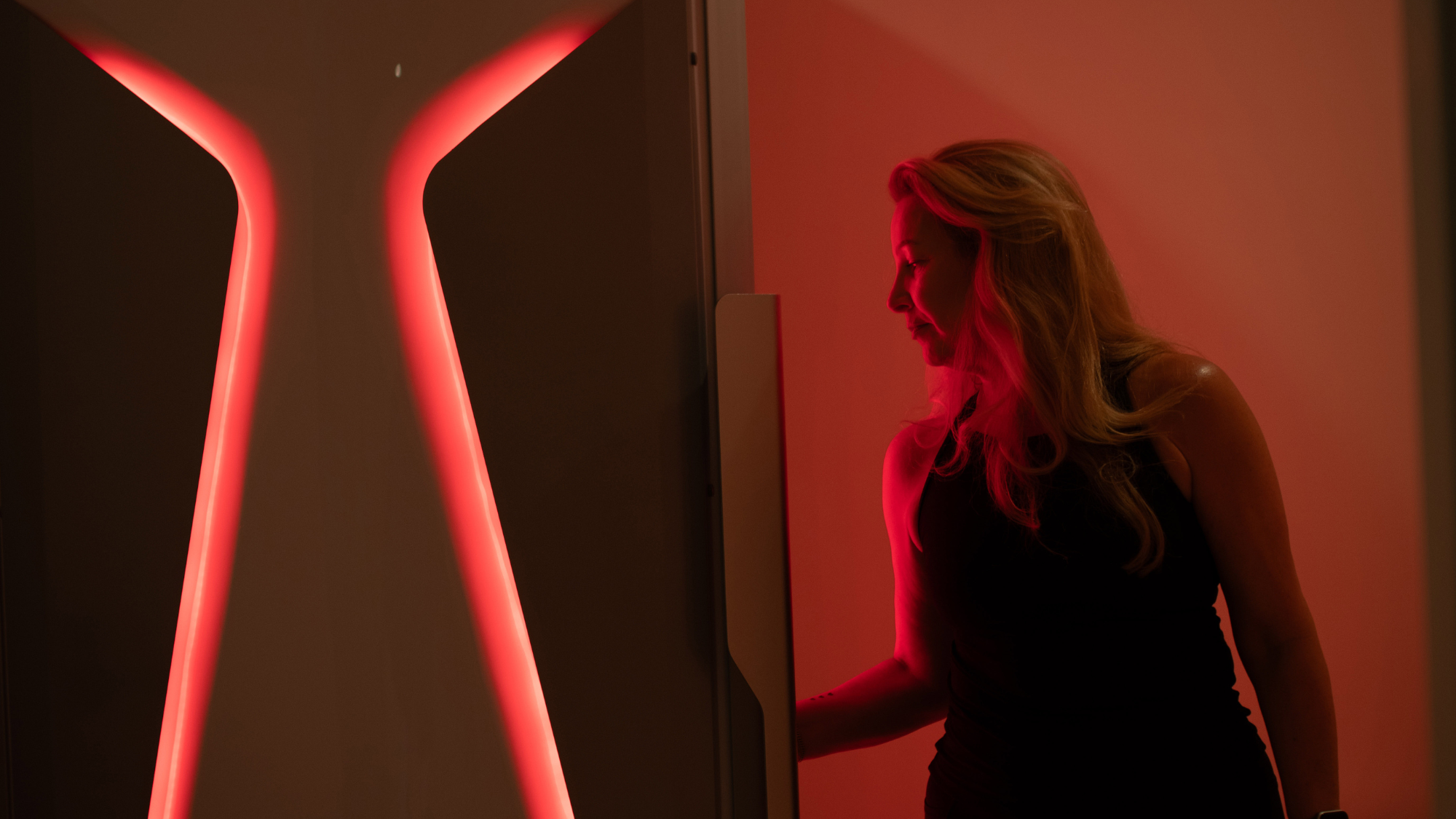
At Boon Wellness in Auckland, red light therapy sessions involve standing or resting in front of specialised light panels that deliver this targeted light energy directly to the tissues. There is no heat involved, no ultraviolet exposure, and no discomfort during the session. The experience is quiet and passive, with the light absorbed through the skin rather than felt as a physical sensation.
Unlike recovery methods that rely on thermal stress, such as sauna or cold immersion, red light therapy works at a cellular level. Its effects are subtle, internal, and cumulative, making it particularly suitable for regular use alongside other recovery practices.
How red light therapy supports recovery
At the core of red light therapy’s effect are the mitochondria within your cells. These structures are responsible for producing the energy required for tissue repair, inflammation regulation, and normal cellular function.
Research suggests that exposure to specific red and near-infrared wavelengths can support mitochondrial activity and local circulation. In practical terms, this may help the body restore damaged tissue more efficiently and manage low-grade inflammation that accumulates from training, physical work, or prolonged stress.
Rather than acting as a performance enhancer or quick fix, red light therapy supports the systems already responsible for recovery. Over time, this can translate into smoother recovery between training sessions, improved joint comfort, and a general reduction in residual physical tension.
Why people in Auckland use red light therapy
Most people use red light therapy as part of a broader recovery routine rather than as a standalone solution.
Clients commonly incorporate red light therapy to support recovery from regular training, manage muscle tightness associated with physical or desk-based work, or address fatigue that does not fully resolve through sleep alone. It is also often used by people looking for a gentle recovery option on rest days or during periods of higher mental stress.
Because it places minimal demand on the nervous system, red light therapy pairs well with more stimulating recovery methods such as contrast therapy, infrared sauna, or massage. Some people use it after intense training, while others prefer it in the evening as part of winding down.
What a red light therapy session feels like
A typical red light therapy session at Boon Wellness lasts between ten and fifteen minutes.
You stand or rest in a quiet, private room while warm light surrounds you. There is no sensation beyond the light itself. Breathing naturally slows, and many people find the experience mentally calming, even meditative.
Physically, the effects are rarely dramatic after a single session. Instead, they tend to emerge gradually with consistent use. Over time, many clients report less lingering soreness, easier movement, and a subtle but noticeable improvement in how quickly their body feels ready for the next training session.
This gradual build is part of what makes red light therapy sustainable. It supports recovery without overwhelming the system.
How often should you use red light therapy?
For general recovery support, many people find that two to four sessions per week fits well within their routine.
Consistency is more important than intensity. Short, regular sessions allow the benefits of red light therapy to accumulate without placing additional stress on the body. Rather than thinking of it as a treatment to use only when something feels wrong, it is best approached as background support that helps maintain recovery capacity over time.
A quiet but effective recovery option in Auckland
Red light therapy works differently to heat or cold exposure.
There is no shock to the system, no endurance component, and no discomfort to push through. Instead, it quietly supports the deeper biological processes that allow the body to repair and adapt.
For many people, this simplicity is its greatest strength. Red light therapy becomes easy to maintain, easy to return to, and easy to integrate into a broader recovery routine.
Over time, small, consistent inputs often produce the most reliable results.
Experience red light therapy at Boon Wellness Auckland
If you would like to include red light therapy in your recovery routine, sessions are available at Boon Wellness in Auckland, alongside contrast therapy and infrared sauna.
You can learn more or book online.
We can’t wait to see you.
